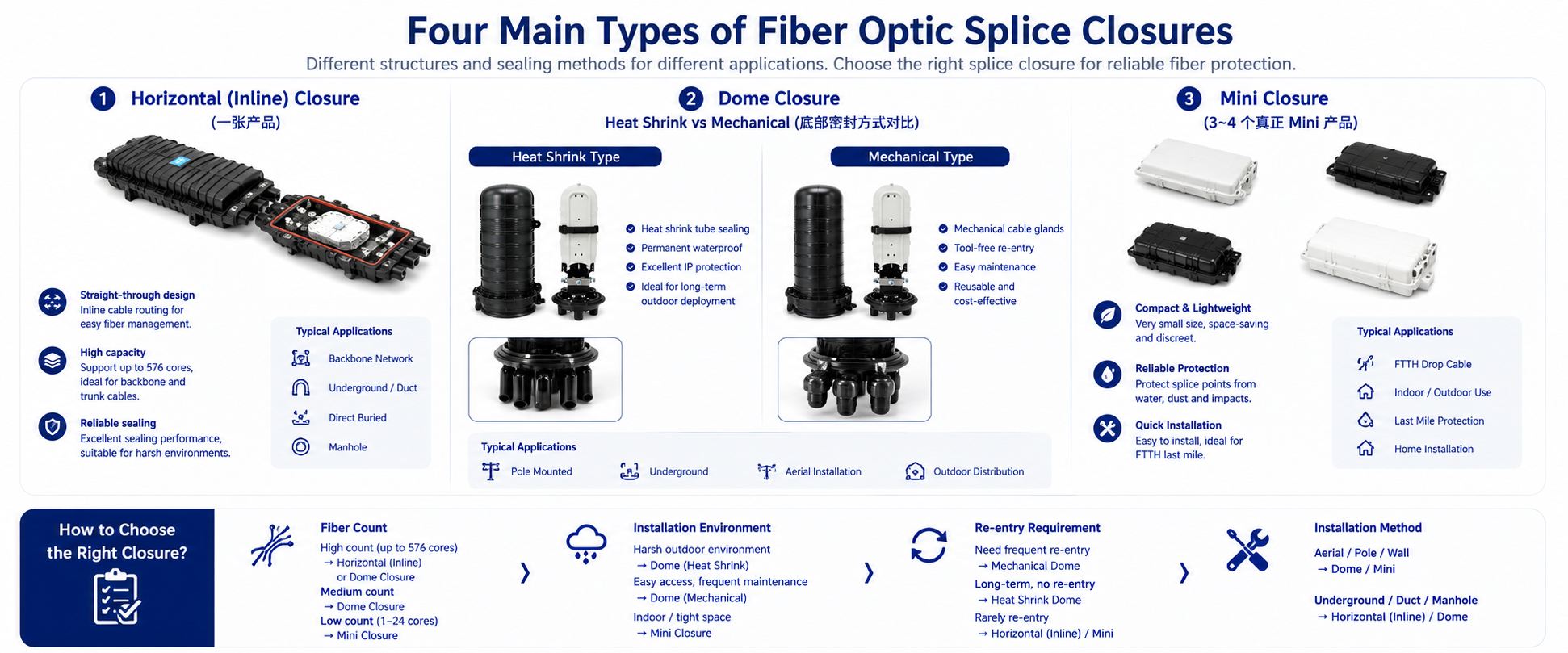
How to Choose the Right Fiber Optic Splice Closure?
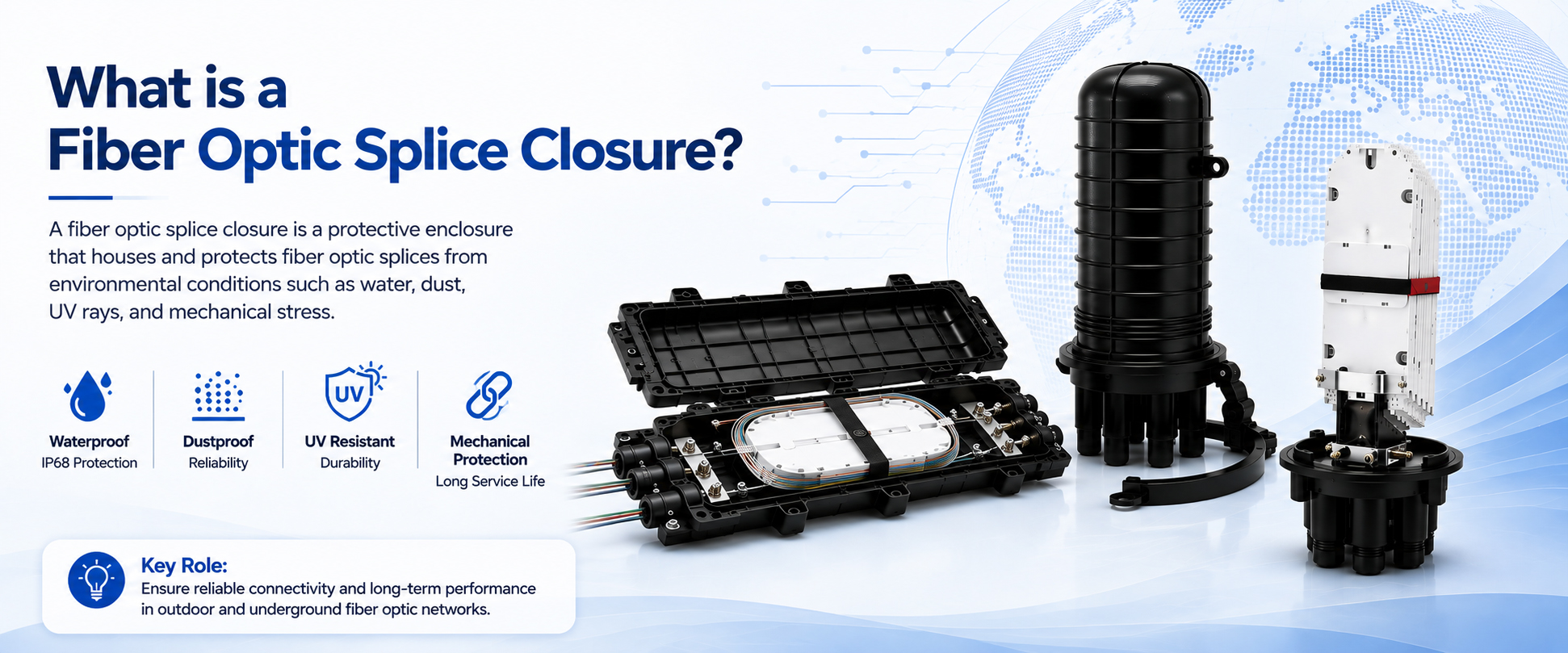
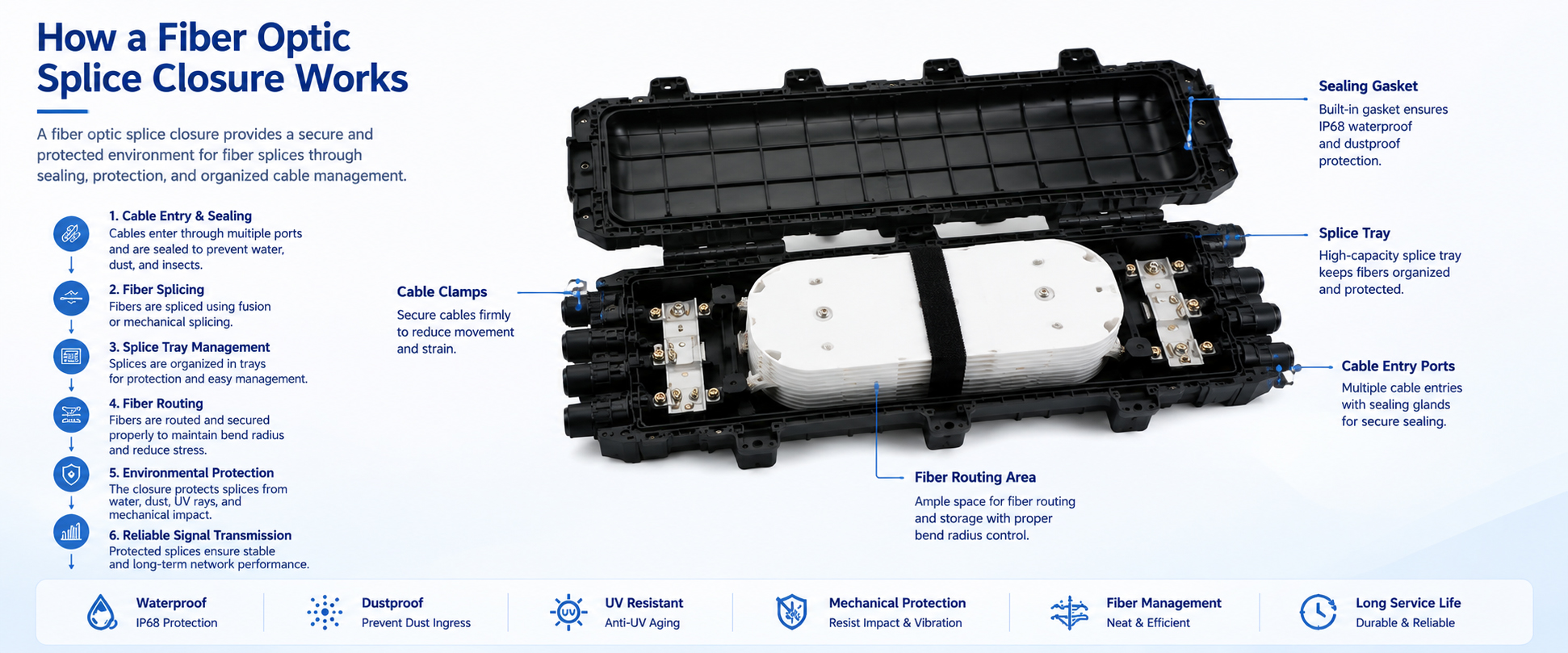
A fiber optic splice closure protects fiber splicing points from water, dust, mechanical stress, UV exposure, and other environmental risks. It also organizes splice trays, cable entries, and fiber routing so technicians can install, inspect, and maintain the network safely.
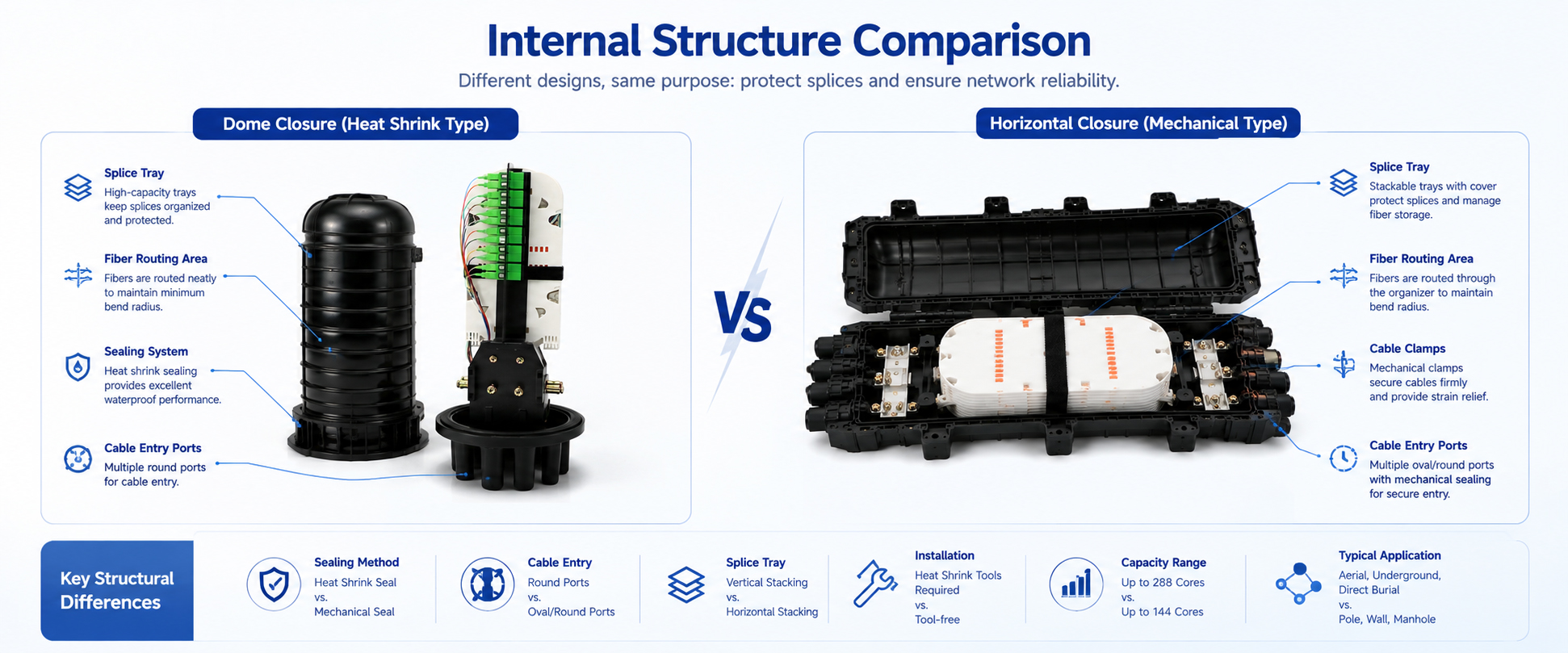
However, splice closures differ significantly in housing structure, sealing method, splice capacity, cable entry design, and installation requirements. A closure that works well for an aerial FTTH network may not be suitable for underground ducts, direct burial, or high-capacity backbone applications.
This guide explains how fiber optic splice closures are classified, compares dome and horizontal structures, introduces heat-shrink and mechanical sealing systems, and outlines the key factors to consider before selecting a closure for your project.
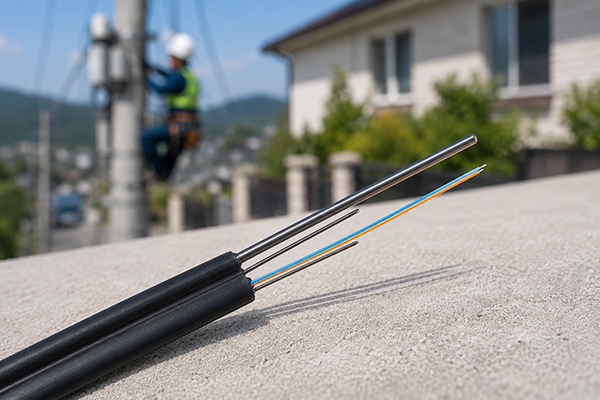
An FTTH drop cable is the final fiber optic cable used to connect the fiber distribution network to a subscriber’s home, apartment, office, or other premises.
It is designed for the last-mile section of an FTTH network and is available in different constructions to suit indoor, underground duct, outdoor wall-mounted, and aerial installations. Depending on the deployment environment, different jacket materials, strength members, and cable structures are selected to ensure reliable long-term performance.
Common Types of XXX
1. Indoor FTTH Drop Cable
Indoor FTTH drop cables are designed for routing inside apartments, offices, residential buildings, and other indoor environments.
They are normally lightweight and flexible, making them easy to install along walls, through conduits, and inside cable trays. LSZH jackets are commonly used where low-smoke and halogen-free performance is required.
Typical applications
- Apartments and residential buildings
- Offices and commercial premises
- Indoor optical outlets
- Connections from building entry boxes to user terminals
2. Outdoor Duct Drop Cable
Outdoor duct drop cables are designed for installation inside underground ducts, conduits, or other protected outdoor pathways.
Compared with standard indoor cables, they generally provide better resistance to moisture, external pressure, and changing outdoor temperatures.
Typical applications
- Underground access networks
- Residential communities
- Campus networks
- Municipal broadband projects
3. Outdoor Self-Supporting Drop Cable
Outdoor self-supporting drop cables are mainly used for aerial connections between utility poles and subscriber buildings.
They normally include an integrated messenger wire that supports the cable during suspended installation and provides the tensile strength required for pole-to-house routing.
Typical applications
- Pole-to-house connections
- Rural broadband networks
- Residential aerial FTTH
- Low-rise building access
4. Indoor/Outdoor FTTH Drop Cable
Indoor/outdoor FTTH drop cables are designed for routes that begin outside a building and continue directly to an indoor termination point.
Using one cable across both environments can reduce cable transitions, simplify installation, and reduce the number of accessories required at the building entrance.
Typical applications
- Residential FTTH projects
- Apartment buildings
- Commercial buildings
- Outdoor entry points connected directly to indoor terminals
- European broadband deployments
Comparison Table
|
Cable Type |
Installation Environment |
Main Advantage |
Typical Application |
|---|---|---|---|
|
Indoor FTTH Drop Cable |
Indoor |
Flexible and easy to route |
Apartments, offices and indoor access |
|
Outdoor Duct Drop Cable |
Underground duct or conduit |
Better moisture and crush resistance |
Duct networks and underground access |
|
Outdoor Self-Supporting Drop Cable |
Aerial |
Messenger wire supports suspended installation |
Pole-to-house and rural FTTH |
|
Indoor/Outdoor Drop Cable |
Mixed indoor and outdoor route |
Reduces cable transitions |
Residential and commercial building access |
Key Selection Factors
Explanation...
Explanation...
Explanation...
Explanation...
How to Choose XXX?
Explanation...
Explanation...
Explanation...
Explanation...
Conclusion
There is no single FTTH drop cable suitable for every installation.
Indoor cables are designed for flexible routing inside buildings. Outdoor duct cables provide stronger environmental protection. Self-supporting cables are used for aerial connections, while indoor/outdoor cables can simplify continuous routing from an outdoor access point into a building.
The most reliable selection method is to begin with the installation route and then confirm the fiber type, strength member, jacket material, and applicable project standards.
Selecting the right FTTH drop cable is more than choosing a product—it is about ensuring reliable network performance throughout the entire lifecycle of the fiber infrastructure.
By understanding different cable structures and installation environments, network builders can reduce deployment costs, improve installation efficiency and build more reliable FTTH networks.
Need Help with Your Fiber Optic Project?
Whether you’re building an FTTH network, expanding a data center, or deploying fiber optic infrastructure, selecting the right products is critical to long-term network performance.

How to Choose the Right FTTH Drop Cable?