What is the difference between fiber cable and fiber patch cord?
2023-09-26
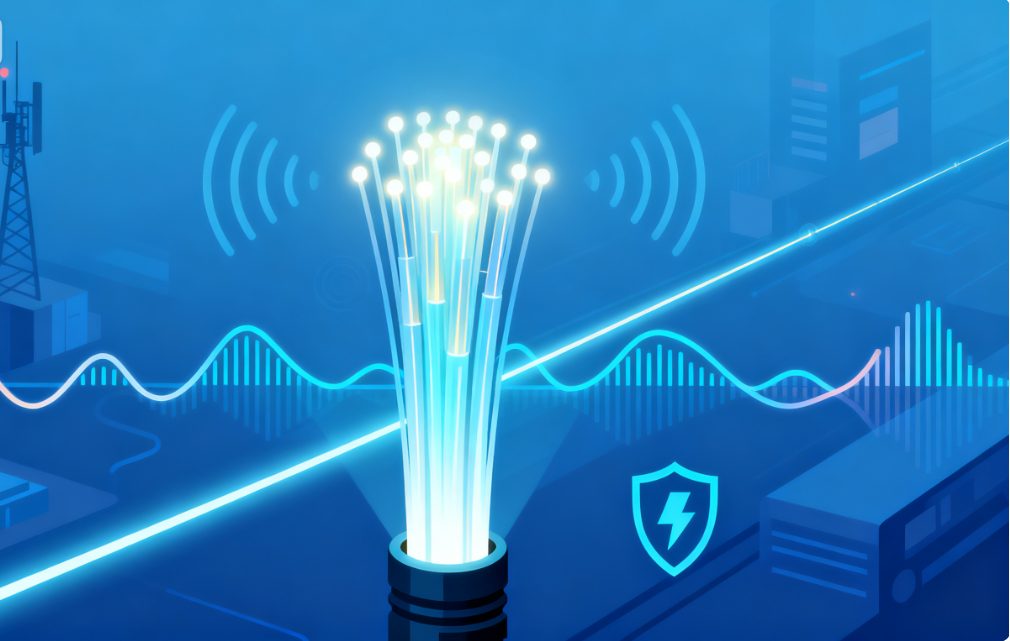
The business environment in today's world is becoming increasingly digital, and fiber optic technology plays a vital role in the digital world. They transmit data in the form of optical signals, providing high-speed, high-bandwidth and low-latency network connections. Fiber optic cables and fiber optic patchcords are two key components in network construction and data transmission.
Fiber optic cables are a high-performance optical communication medium used for data transmission over long distances. They are typically designed as multi-core fiber optic bundles containing hundreds or thousands of fiber optic core wires inside. These fiber optic cores are organized and protected by a complex hierarchy to ensure signal integrity and reliability.
Structure
Fiber Optic Core: This is the transmission medium for optical signals. Fiber optic cores are usually made of glass or plastic and have a high refractive index, allowing light signals to propagate through them.
Fiber Cladding: The cladding is the outer protective layer of the fiber optic core and is usually made of a material with a low refractive index, which helps the light signal to reflect within the core.
Armor Cladding: The cladding is the external protective layer of fiber optic cables, usually made of braided metal wire or aluminum foil, to prevent physical damage and electromagnetic interference.
Uses
Long Distance Communications: Fiber optic cables play a key role in inter-city, international and undersea communications. They are able to transmit large amounts of data while maintaining signal stability.
Internet backbone: As part of the Internet backbone, fiber optic cables connect data centers and servers around the world and support the transmission of global Internet traffic.
Telecommunications Networks: Telecommunications carriers use fiber optic cables to provide telephone, broadband and television signal transmission services.
Fiber optic patch cords are relatively short fiber optic connections used to create fast, reliable connections between devices. They are commonly used in data centers, offices, server rooms, and other places to connect servers, switches, routers, and other network equipment.
Structure
Fiber Optic Core: Like fiber optic cables, armoured fiber optic patch cord outdoor contain one or more fiber optic cores that are used to transmit optical signals.
Fiber Cladding: The cladding is used to protect the fiber optic core and ensure the integrity of the signal.
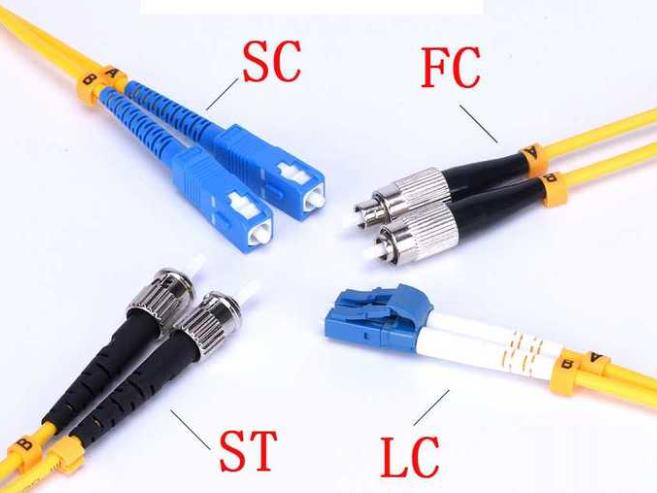
Connector: Fiber optic patch cords usually have connectors attached at both ends to connect to equipment or fiber optic patch panels. Common connector types include SC, LC, ST and MTP/MPO.
Uses
Device Connectivity: Fiber optic patch cords are used to connect network devices such as servers, switches, and routers to the network to provide high-speed, stable data transmission.
Data Center Architecture: Data centers usually use a large number of patch cords to build high-density, high-performance network architecture to support cloud computing and big data applications.
Network Maintenance: Fiber optic patch cords are critical tool for network maintenance, and can be used to quickly replace or adjust equipment connections, reducing downtime.
Comparison of Performance and Usage
Fiber optic cables offer excellent transmission speeds and high bandwidth. They are capable of transmitting large amounts of data over long distances and the signal is not susceptible to interference or attenuation. The outer layer of cables is usually protected by an armored material, which makes them extremely durable and resistant to harsh weather and physical damage. These characteristics make it ideal for long distance communications, such as connections across cities or internationally.
Fiber optic patch cords are not as good as fiber optic cables in terms of transmission distance, but they excel in fast, short-distance connections. They are commonly used in data centers, offices, server rooms, and other locations to connect devices such as servers, switches, and routers. Performance characteristics include low latency, high reliability and flexibility. They are a key component in building local area networks (LANs) and wide area networks (WANs), supporting internal communications and device interconnections.
Choosing the right components should be based on specific needs.
Performance
Fiber optic cables offer excellent transmission speeds and high bandwidth. They are capable of transmitting large amounts of data over long distances and the signal is not susceptible to interference or attenuation. The outer layer of cables is usually protected by an armored material, which makes them extremely durable and resistant to harsh weather and physical damage. These characteristics make it ideal for long distance communications, such as connections across cities or internationally.
Applications
Fiber optic patch cords are not as good as fiber optic cables in terms of transmission distance, but they excel in fast, short-distance connections. They are commonly used in data centers, offices, server rooms, and other locations to connect devices such as servers, switches, and routers. Performance characteristics include low latency, high reliability and flexibility. They are a key component in building local area networks (LANs) and wide area networks (WANs), supporting internal communications and device interconnections.
How to choose the right components
Choosing the right components should be based on specific needs.
Transmission Distance: Fiber optic cables are preferred if long distances are required. For faster connections over shorter distances, outdoor patchcord are more appropriate.
Usage: Consider your network architecture and application. Fiber optic cables are good for inter-city communications, while fiber optic patch cords are good for connecting devices to each other.
Cost Effectiveness: Fiber optic cables are typically more expensive because they require more material and protection. Optical patch cord are more economical for short distance connections.
Performance needs: Consider your network's performance needs. If you need high bandwidth, low latency and reliability, you may need fiber optic cable. If fast connections and device interconnections are needed, fiber optic patch cords are a better choice.
Future Expansion: Consider future expansion plans for your network. Choose components that are flexible so you can easily expand or upgrade your network when needed.
As the digital age continues to evolve, it is vital to understand the similarities and differences when choosing fiber optic products. Choosing the right components for specific needs and uses will help improve network performance and maintainability, opening up more opportunities in the business world. An in-depth understanding of both technologies is a critical step in ensuring that your network infrastructure remains competitive in the digital age!
What is an ODF panel?
Fiber Optic Terminal Boxes: Ensuring Network Stability
Related Article


1、Core Definition and Working Principle
2、 Key Characteristics
3、 Main Classifications
4、Core Differences from Multimode Fiber
5、Typical Application Scenarios
2、 Key Characteristics
3、 Main Classifications
4、Core Differences from Multimode Fiber
5、Typical Application Scenarios
What is single-mode fiber optic?