What modes are there for fiber optic cable?
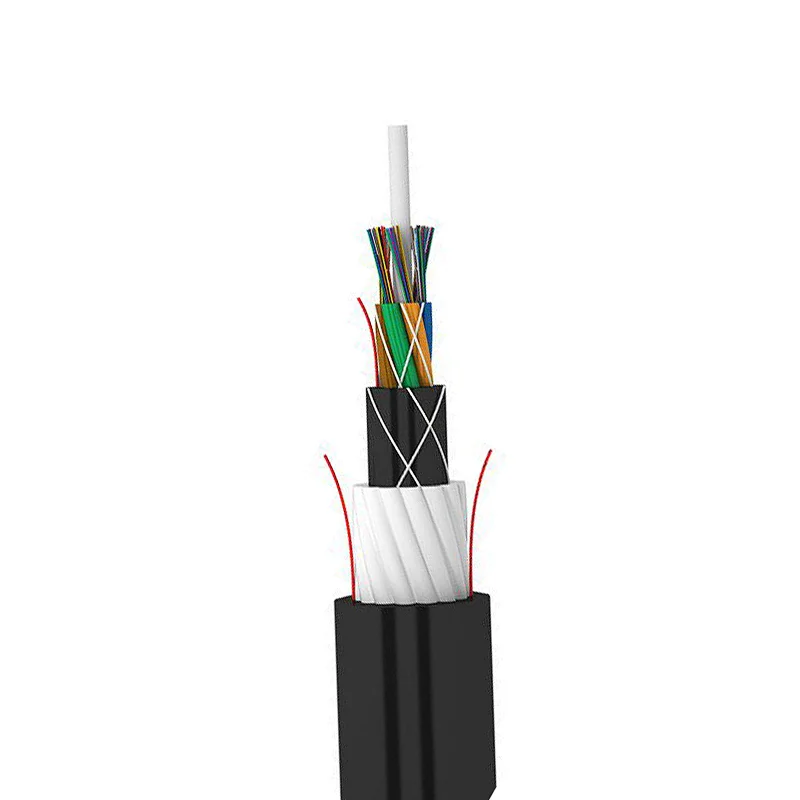
Fiber optic cables support different modes of light propagation, which refer to the paths that light signals can take within the fiber core. The two main modes used in fiber optic cables are:
- Single-mode: Single-mode fibers (SMF) have a small core diameter, typically around 8 to 10 microns. In single-mode fibers, light travels along a single path, known as the fundamental mode. Due to the small core size, only one mode of light is effectively transmitted.
Single-mode fibers (SMFs) are widely used in various applications that require long-distance, high-bandwidth data transmission. Some of the key applications of single-mode fibers include:
- Telecommunications: Single-mode fibers are extensively used in telecommunications networks, including long-haul backbone networks, metropolitan networks, and fiber-to-the-home (FTTH) installations. They enable high-capacity data transmission over long distances, supporting the ever-increasing demand for voice, video, and data communication.
- Internet Backbone: Single-mode fibers form the backbone infrastructure of the internet, carrying massive amounts of data across continents and countries. They connect major data centers, internet exchange points, and network hubs, facilitating global connectivity.
- Long-Haul Transmission: Single-mode fibers are crucial for long-distance transmission of data, voice, and video signals. They enable transmission over hundreds or even thousands of kilometers without signal regeneration, making them ideal for applications such as long-haul data transmission, undersea cables, and intercontinental connections.
- Cable Television (CATV): Single-mode fibers are used in cable television networks to deliver high-quality video signals to homes. They provide the necessary bandwidth to carry a wide range of channels and support technologies like high-definition television (HDTV) and video on demand (VOD).
- Enterprise Networks: Single-mode fibers are employed in enterprise networks to connect different locations within a company or organization. They are used for high-speed data transfer between data centers, campuses, and remote offices, enabling efficient and reliable communication.
- Data Centers: Single-mode fibers are increasingly used in data centers to support high-speed and high-capacity interconnectivity between servers, storage systems, and networking equipment. They enable fast and efficient data transfer, supporting the demanding requirements of cloud computing, big data analytics, and other data-intensive applications.
- Research and Science: Single-mode fibers are utilized in scientific research applications, such as optical sensing, spectroscopy, and laser delivery systems. They provide precise and reliable transmission of light signals in various scientific experiments and instruments.
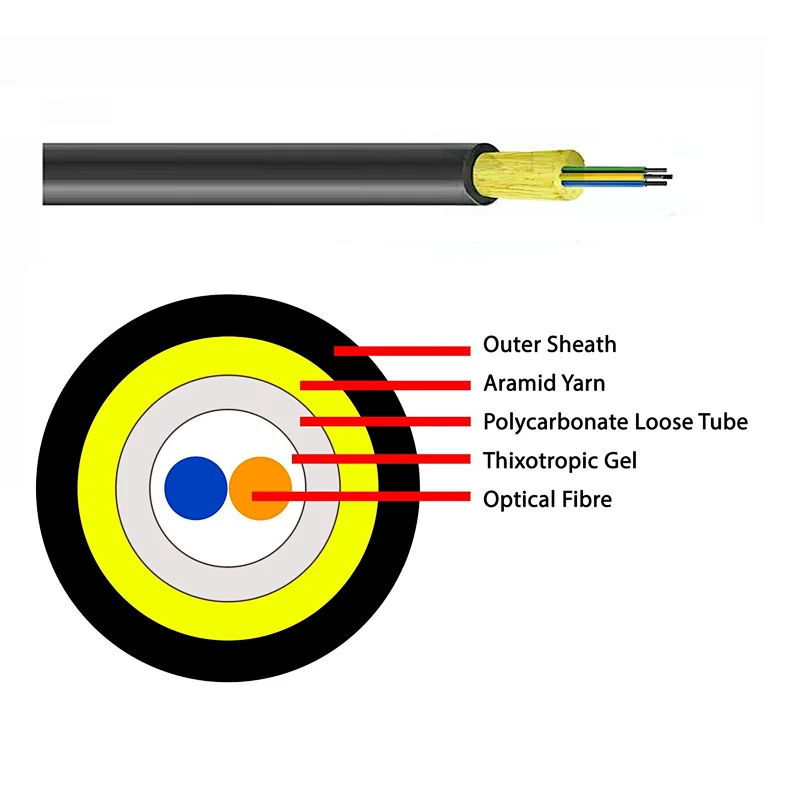
- Multi-mode: Multi-mode fibers (MMF) have a larger core diameter, typically ranging from 50 to 62.5 microns. In multi-mode fibers, multiple light modes can propagate simultaneously, resulting in the dispersion of light signals as they travel through the fiber. The multiple modes can take different paths within the core, leading to modal dispersion, which can limit the distance and data rates over the fiber. Multi-mode fibers are suitable for short-distance applications, such as local area networks (LANs), data centers, and campus networks. They are often used with light-emitting diodes (LEDs) as light sources.
Multi-mode fibers can be further categorized based on the type of light propagation:
Step Index Multi-mode Fibers: Step index fibers have a sharp boundary between the core and cladding, resulting in multiple light modes that propagate at different angles. They are commonly used in older fiber optic installations.
Graded Index Multi-mode Fibers: Graded index fibers have a core with a varying refractive index, gradually decreasing from the center towards the cladding. This refractive index profile helps reduce modal dispersion, allowing for higher data rates and longer transmission distances compared to step index fibers.
Multi-mode fibers (MMFs) find applications in various short-distance data communication systems and local area networks (LANs). Some of the key applications of multi-mode fibers include:
- Local Area Networks (LANs): Multi-mode fibers are commonly used in LANs to connect computers, switches, and other network devices within a limited geographic area, such as an office building or campus. They provide cost-effective solutions for high-speed data transfer in these environments.
- Data Centers: Multi-mode fibers are extensively utilized in data center environments to interconnect servers, storage systems, and networking equipment. They facilitate the fast and efficient transmission of data within the data center, supporting cloud computing, virtualization, and other data-intensive applications.
- Campus Networks: Multi-mode fibers are employed in campus networks that connect various buildings and facilities within a college campus or corporate campus. They enable reliable and high-speed data transmission between different locations within the campus.
- Video Surveillance Systems: Multi-mode fibers are used in video surveillance systems, allowing the transmission of video signals from surveillance cameras to monitoring stations or recording devices. They provide the necessary bandwidth for high-quality video transmission over short distances.
- Audio/Video Systems: Multi-mode fibers are utilized in audio/video systems, including multimedia installations in auditoriums, stadiums, and conference rooms. They enable the transmission of high-definition video and high-fidelity audio signals over relatively short distances.
- Industrial Control Systems: Multi-mode fibers are used in industrial control systems to transmit data between control panels, sensors, and actuators. They provide reliable and noise-resistant communication in harsh industrial environments.
- Premises Cabling: Multi-mode fibers are used for premises cabling, which involves the installation of network infrastructure within commercial buildings, schools, hospitals, and other facilities. They enable high-speed and high-bandwidth connectivity within the premises.
- Test and Measurement: Multi-mode fibers are employed in test and measurement applications, including fiber optic testing, optical time-domain reflectometry (OTDR), and network troubleshooting. They facilitate accurate and efficient characterization of fiber optic links and components.
Difference
Single-mode fibers (SMF) and multi-mode fibers (MMF) are two different types of optical fibers with distinct characteristics. Here's a comparison between single-mode fibers and multi-mode fibers:
- Core Diameter: Single-mode fibers have a smaller core diameter (typically 8 to 10 microns) compared to multi-mode fibers, which have a larger core diameter (typically 50 to 62.5 microns).
- Transmission Distance: Single-mode fibers offer significantly longer transmission distances compared to multi-mode fibers. Single-mode fibers can transmit signals over distances of tens or even hundreds of kilometers without signal regeneration, while multi-mode fibers are typically limited to shorter distances, typically within a few kilometers.
- Bandwidth: Single-mode fibers have higher bandwidth compared to multi-mode fibers. Single-mode fibers can support higher data rates and accommodate a larger number of wavelengths, making them suitable for applications that require high-capacity data transmission. Multi-mode fibers have a lower bandwidth and are generally used for lower-speed applications.
- Dispersion: Single-mode fibers have lower dispersion compared to multi-mode fibers. Dispersion refers to the spreading of light pulses as they travel through the fiber, which can lead to signal distortion. Single-mode fibers minimize dispersion, allowing for better signal integrity and higher data rates over long distances.
- Equipment Compatibility: Single-mode fibers may require specialized equipment, including laser diodes, which are typically more expensive than the equipment used with multi-mode fibers. Multi-mode fibers are compatible with a wider range of light sources, including light-emitting diodes (LEDs), which are generally more affordable.
- Cost: Multi-mode fibers are generally more cost-effective compared to single-mode fibers. The larger core diameter of multi-mode fibers makes them easier and cheaper to manufacture, resulting in lower production costs.
- Future-Proofing: Single-mode fibers offer better scalability and future-proofing compared to multi-mode fibers. With their higher bandwidth and longer transmission distances, single-mode fibers can accommodate evolving network requirements and higher data rates more effectively.
How is data transmitted through fiber optic cables?
What is the difference between Cables and Fiber Optic Cables?
Related Article


2、 Key Characteristics
3、 Main Classifications
4、Core Differences from Multimode Fiber
5、Typical Application Scenarios