How to inspect fiber optic cable?
Outer sheath is a protective layer that is added to cables and wires to provide insulation and protection from external elements, such as moisture, heat, abrasion, and chemicals. The outer sheath is typically made from a durable and flexible material, such as PVC (polyvinyl chloride), PE (polyethylene), LSZH (low smoke zero halogen), or TPU (thermoplastic polyurethane).
The material used for the outer sheath depends on the specific application and the environment in which the cable will be used. In addition to providing protection, the outer sheath can also be used to identify the type of cable, provide resistance to fire, and meet specific safety requirements.
The design of the outer sheath can vary depending on the cable's intended use, with some cables having multiple layers of protection for added durability and insulation.

Optical fiber, also known as fiber optic cable, is a type of high-speed data transmission medium made of thin strands of glass or plastic
A professional optical fiber cable manufacturer generally uses A-level fiber from major manufacturers. Some low-priced and inferior optical cables usually use C-level, D-level optical fibers and smuggled optical fibers from unknown sources.
Moisture and discoloration, and multimode fiber is often mixed with single-mode fiber, and generally small factories lack the necessary testing equipment, so they cannot judge the quality of the fiber. Because the naked eye cannot distinguish such optical fibers, the common problems encountered during construction are: the bandwidth is very narrow, the transmission distance is short.

3. Reinforced steel wire
Reinforced steel wire is a type of steel wire that is commonly used in construction to add strength and durability to concrete structures.
The steel wire of the outdoor optical cable of regular manufacturers is phosphating-treated, and the surface is gray. This kind of steel wire does not increase hydrogen loss after being cabled, does not rust, and has high strength. Inferior optical cables are generally replaced by thin iron wires or aluminum wires. The identification method is easy. The appearance is white and can be bent at will when pinched in the hand. The optical cable produced by such steel wire has a large hydrogen loss, and after a long time, the two ends of the optical fiber box will rust and break.
4. Steel armor
Steel armor is a protective layer made of steel that is added to various products for increased durability and protection.
Regular manufacturers use double-sided anti-rust coating longitudinally wrapped steel strips, and low-quality optical cables use ordinary iron sheets, usually only one side of which has been treated with anti-rust

5. Loose tube
A loose tube is a type of protective casing used in fiber optic cables to protect the optical fibers from external elements, such as moisture, temperature fluctuations, and physical damage. The loose tube is typically made of plastic and is designed to be flexible, providing protection to the fiber while allowing it to move and expand as needed.
Inside the loose tube, the optical fibers are arranged in a bundle and coated with a layer of protective material, such as acrylate or polyimide.
The loose tube design is preferred in outdoor or harsh environments where the cable may be exposed to moisture or temperature fluctuations, as it provides a high level of protection against these elements. Additionally, the loose tube design can accommodate a higher fiber count, making it suitable for high-density fiber optic applications.
Loose tube fiber optic cables are commonly used in telecommunications, data centers, and other applications where reliable and high-speed data transmission is required over long distances.
The loose tube containing the optical fiber in the optical cable should be made of PBT material.
Such a tube has high strength, no deformation, and anti-aging. Inferior optical cables generally use PVC as the sleeve. The outer diameter of such a sleeve is very thin, and it will be flat when squeezed by hand, a bit like a drinking straw for us to drink.

6. Fiber Jelly
Fiber jelly, also known as cable filling compound or cable gel, is a type of thixotropic gel that is used to protect and insulate fiber optic cables.
The fiber jelly in the outdoor optical cable can prevent the oxidation of the optical fiber.
Due to the moisture ingress, the fiber jelly used in the inferior optical fiber is very little, which seriously affects the life of the optical fiber.
7. Aramid yarn
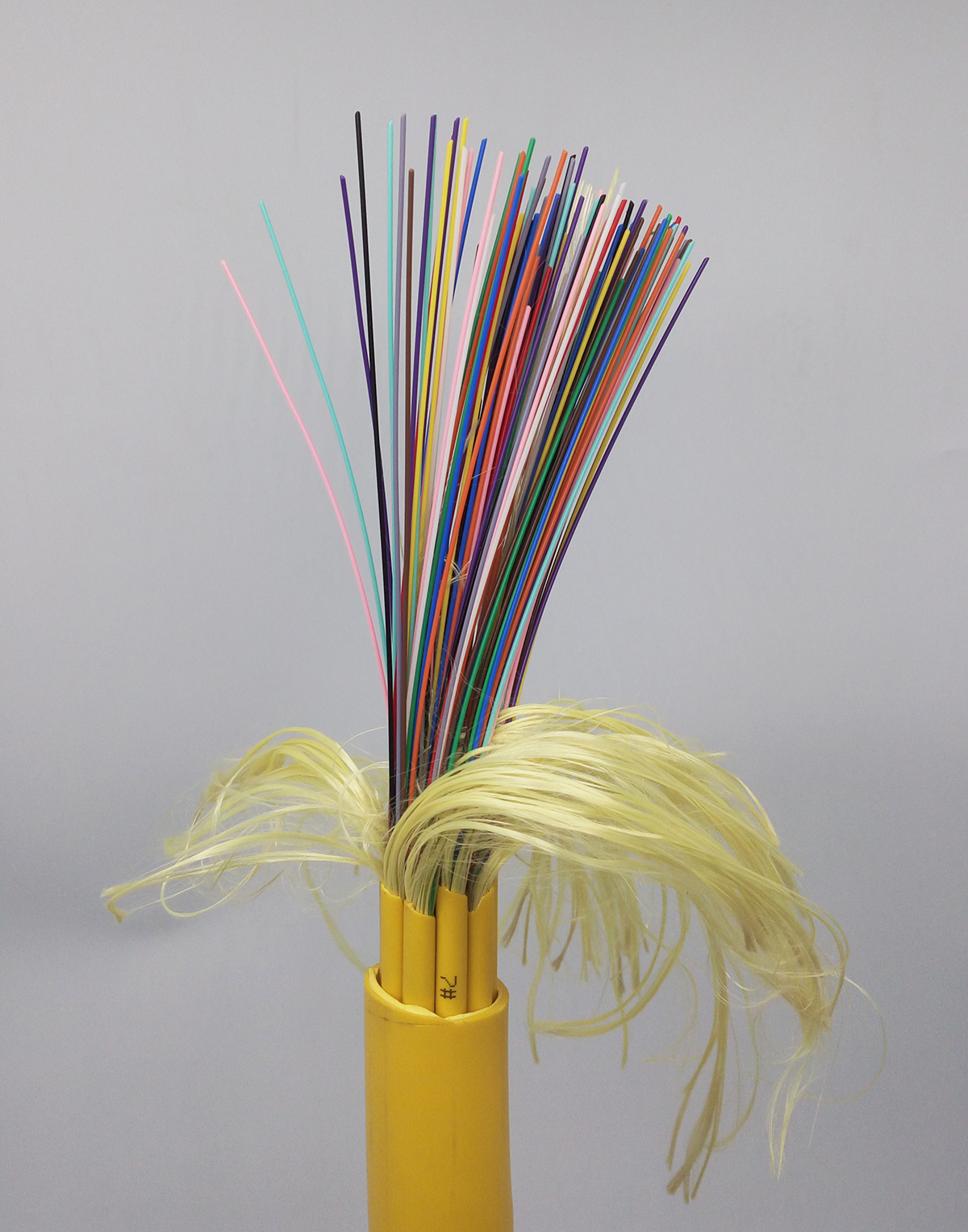
Aramid yarn is a type of high-strength synthetic fiber that is made from aramid polymer fibers. It is commonly used in a variety of applications that require high strength, durability, and heat resistance.
Also known as Kevlar, is a high-strength chemical material. It is currently used most in the military industry. Military helmets and bulletproof vests are produced from this material.
At present, only DuPont and Aksu in the Netherlands can produce it in the world。 Indoor optical cables and electric overhead optical cables (ADSS) both use aramid yarns as reinforcements.
Due to the high cost of aramid, inferior indoor optical cables generally have a very thin outer diameter, so that a few strands of aramid can be used to save costs. Such an optical cable is easily broken when passing through the pipe.
Because the ADSS optical cable determines the amount of aramid used in the optical cable according to the span and the wind speed per second, it is generally not dare to cut corners.
Because we use the central beam tube light armored optical cable for testing, it does not contain Kevlar.
8. The diameter of the optical cable
For the central Loose tube optical cable, the diameter standard is generally about 8.0mm, plus or minus 0.2mm is also acceptable. for stranded loose tube calbe, the diameter standard is generally about 10.0mm, plus or minus 0.2mm is also acceptable.

How fiber optic cable is made?
How is data transmitted through fiber optic cables?
Related Article


2、 Key Characteristics
3、 Main Classifications
4、Core Differences from Multimode Fiber
5、Typical Application Scenarios